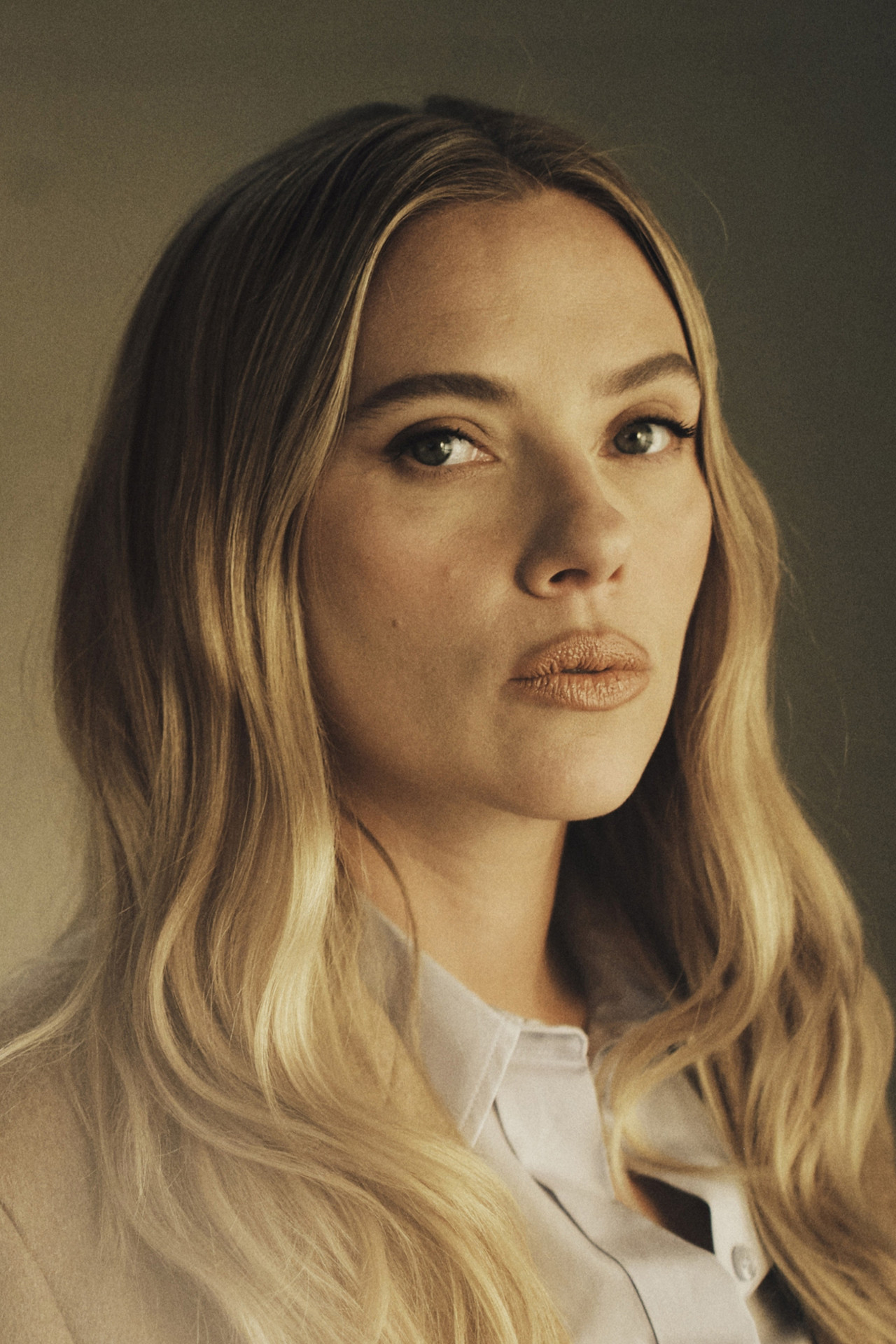
Built a career on art-house credibility, cashed it in on a franchise, then sued the studio when they tried to shortchange her.
At a glance
- Known for
- Black Widow in the MCU · Lost in Translation · Marriage Story
- Before fame
- Enrolled at Lee Strasberg Institute at age 7 after a talent agent signed her brother instead
- Off-screen
- Married SNL's Colin Jost in 2020, has a twin brother, and grew up on food stamps in Manhattan
Part of The Avengers featuring Robert Downey Jr. and Chris Evans, and Child Stars, All Grown Up with Leonardo DiCaprio and Jodie Foster.
Timeline
Critical darling, franchise weapon, then the woman who made Disney and OpenAI flinch.
The Corporate Fighter
She sued Disney in July 2021 over the simultaneous Disney+ Premier Access release of Black Widow, arguing it cost her a guaranteed box-office bonus. Disney's public response called the suit "sad and distressing," which backfired badly enough that they settled two months later for over $40 million. Then in 2024, OpenAI debuted a ChatGPT voice called "Sky" that sounded strikingly like her, after she'd twice declined Sam Altman's requests to license her actual voice. She sent legal letters. OpenAI pulled the voice. Two of the world's most powerful companies, and both of them blinked first.
Franchise Titan
Black Widow wasn't even her first choice of casting - she got the role after Emily Blunt dropped out due to scheduling conflicts. She played Natasha Romanoff across more than a decade of MCU films, from Iron Man 2 through Black Widow, becoming the longest-running female franchise anchor in Marvel history. The same year she debuted in Iron Man 2, she won a Tony for her Broadway debut in A View from the Bridge. By 2019, she'd earned dual Oscar nominations simultaneously - Best Actress for Marriage Story and Best Supporting Actress for Jojo Rabbit - proof she never treated the MCU as a ceiling.
Art-House Darling
In 2003, she released two films that would define her early reputation: Sofia Coppola's Lost in Translation and Peter Webber's Girl with a Pearl Earring, earning simultaneous Golden Globe and BAFTA nominations for both. She won the BAFTA for Lost in Translation, playing opposite Bill Murray with a quiet precision that announced she wasn't a child actress grown up, she was something else entirely. Signing a multi-film Marvel deal in 2009 looked like a commercial detour at the time. It wasn't.
Early Promise
Her film debut came at nine in the fantasy comedy North (1994), and two years later she earned an Independent Spirit Award nomination for Manny & Lo. For a twelve-year-old, that kind of recognition meant the industry was already paying attention.
Rise to Fame
A $4 million Sofia Coppola film wasn't supposed to make a movie star. Lost in Translation grossed $119 million and earned her a BAFTA for Best Actress at 19. She was 17 when she shot it, cast because Coppola had spotted her in Manny & Lo years earlier and compared her to a young Lauren Bacall.
The reward was years of being offered "the girlfriend, the other woman, a sex object," as she's put it. Hollywood saw the face before the performance. The performance caught up eventually, but it took a decade of picking fights with her own image to get there.
In the Spotlight
Her films have grossed over $15 billion worldwide, briefly making her the highest-grossing lead actor in box office history. The number is almost beside the point. What defines her current position isn't the money she's made but the money she's fought for.
She sued Disney in 2021 after Black Widow's simultaneous streaming release cost her over $50 million in bonuses. Disney fired back by revealing her $20 million salary. She settled for a reported $40 million, and the lawsuit effectively killed simultaneous streaming releases across the industry. Then OpenAI built a ChatGPT voice strikingly similar to hers, after she'd declined Sam Altman's offer. She's become Hollywood's accidental test case for what happens when corporations borrow your likeness without asking.
Side Notes
Her high school boyfriend at Professional Children's School was Jack Antonoff, years before he became pop music's most in-demand producer. She won a Tony on her first Broadway outing, for A View from the Bridge in 2010.
A Tom Waits cover album in 2008, produced by TV on the Radio's Dave Sitek with David Bowie on two tracks, sold 5,100 copies in its first week. She co-founded a gourmet popcorn shop in Paris called Yummy Pop. It closed.