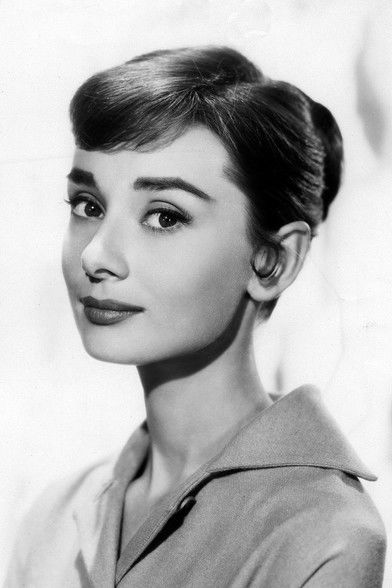
Rise to Fame
The ballerina dream died because of the war. Years of starvation during the Dutch Hunger Winter left her body too compromised for professional ballet, so she pivoted to theater. That pivot led to the title role in Gigi on Broadway, which was enough to catch director William Wyler's eye for Roman Holiday. Her Hollywood debut in 1953 swept every major award: Oscar, BAFTA, Golden Globe, and New York Film Critics Circle. Almost nobody does that on a Hollywood debut.
In the Spotlight
She became the face of understated elegance that has never fully gone out of style. The Givenchy black dress from Breakfast at Tiffany's in 1961 permanently altered what the little black dress meant. But the image that aged better was the one from her final years: an exhausted woman visiting famine camps in Ethiopia and Sudan as a UNICEF goodwill ambassador. She received the Presidential Medal of Freedom in 1992. The fashion world and the relief work were the same person, which she seemed to find obvious.
Side Notes
Her parents both flirted with fascism in the 1930s. Her father's ties to Oswald Mosley's movement got him interned in Britain. Her mother wrote favorable articles about Hitler. Audrey spent the same war performing secret concerts for the Dutch resistance and acting as a courier for Allied pilots. The Nazis executed her uncle in retaliation. Her famously slender figure came directly from malnutrition during the Dutch Hunger Winter. The gap between her parents' politics and her own wartime record is one of the stranger contradictions in Hollywood biography.
Final Chapter
The 1993 Academy Awards ceremony, held weeks after her death, presented her with the Jean Hersholt Humanitarian Award; her son Sean Ferrer accepted on her behalf. Gregory Peck recorded a tribute reading Tagore's poem 'Unending Love.' Her son founded the Audrey Hepburn Children's Fund in 1994 to continue her UNICEF work. In 2002, UNICEF unveiled a sculpture called 'The Spirit of Audrey' at its New York headquarters.