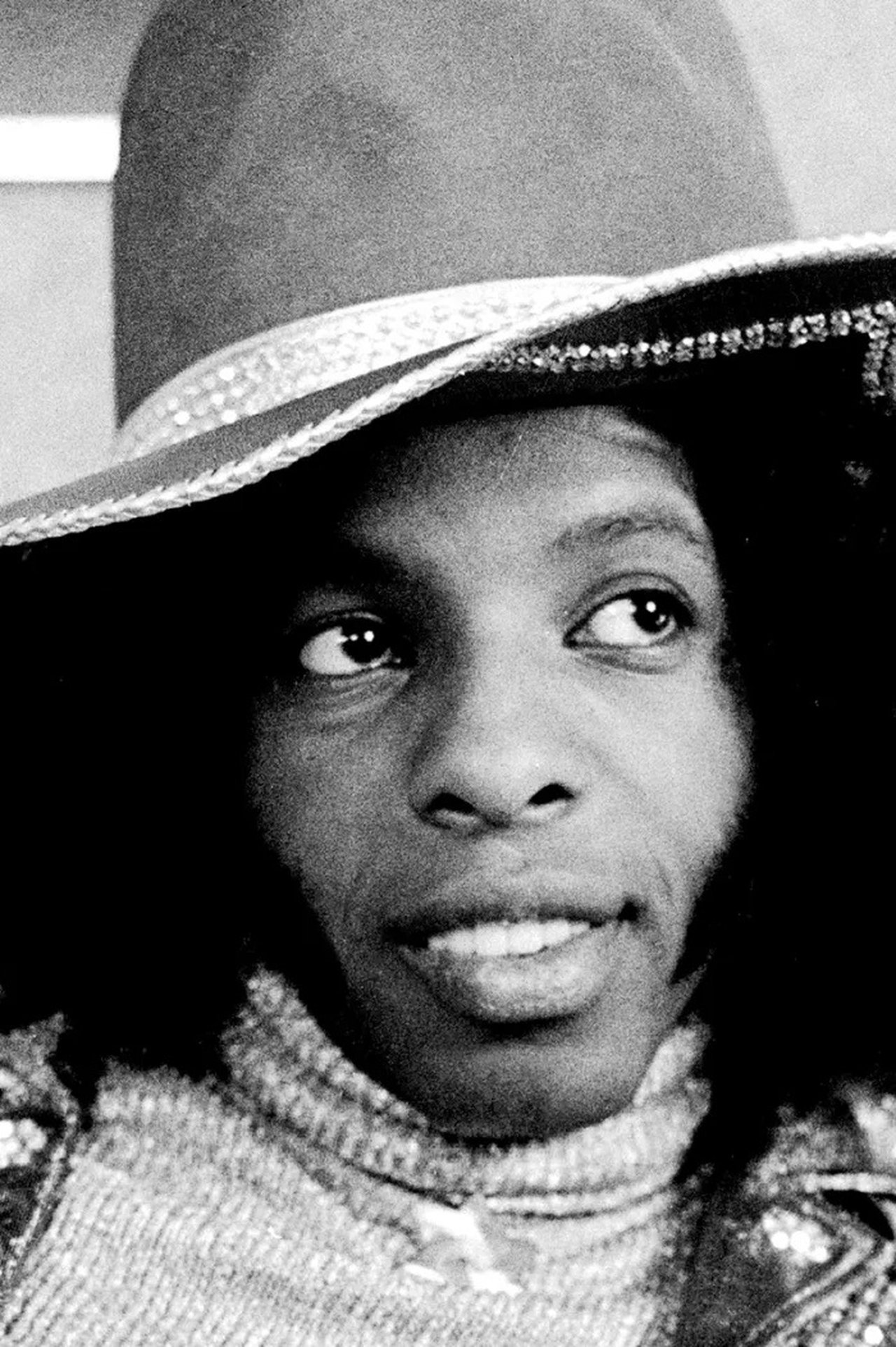
He built a band on radical joy, then spent four decades vanishing from everything it created.
At a glance
- Known for
- Frontman of Sly and the Family Stone, three No. 1 hits, Woodstock
- Before fame
- DJ at San Francisco's KSOL who slipped Beatles tracks into a soul station's rotation
- Off-screen
- Sold his publishing to Michael Jackson for $1 million, was living in a van by 2011
Rise to Fame
A soul station in 1964 San Francisco wasn't playing the Beatles. As a DJ at KSOL, he changed that, slipping white acts into the rotation and pulling 40% of the audience. The Autumn Records staff job put him in studios with white San Francisco acts, including Grace Slick's first group.
The Family Stone formed in 1967 with a lineup that shouldn't have worked: Black and white, men and women. Their debut flopped. Management told him it was "too funky," which was the wrong lesson to draw. "Dance to the Music" went Top 10. "Everyday People" hit No. 1 and dropped "different strokes for different folks" into the language. By Woodstock, they took the stage at 3:30 AM to a half-asleep crowd. They weren't half-asleep for long.
In the Spotlight
The collapse arrived on schedule. In 1970, he cancelled nearly a third of his concerts. A no-show at Chicago's Grant Park triggered a riot that injured 162 people. Cocaine hollowed out the rest.
He sold his publishing to Michael Jackson for $1 million in 1984, which tells you everything about where he was by then. His manager reportedly exploited the addiction, loaning drug money before locking him into a contract that siphoned royalties for two decades. By 2011, he was living in a van in South Central LA. The legal fight wasn't much help: a jury awarded him $5 million in 2015, then a judge reversed it, ruling he'd signed the rights away in 1989. The man who built utopian funk spent his final decades fighting over money that was already gone.
Side Notes
Ten studio albums, sampled over 800 times. The drum break from "Sing a Simple Song" became one of hip-hop's foundational loops, turning up in Tupac, Dr. Dre, Eazy-E, and Snoop Dogg tracks.
Larry Graham, the band's bassist, developed slap bass in the group, a technique he stumbled into while trying to replace a missing drummer in his mother's band. That one innovation rewired funk and R&B for the next half-century. The band was a laboratory. The experiments kept paying off long after the lab shut down.
Final Chapter
Questlove's documentary Sly Lives! (aka The Burden of Black Genius) premiered on Hulu four months before his death, scoring 93% on Rotten Tomatoes. The critical appreciation, for once, got there on time.