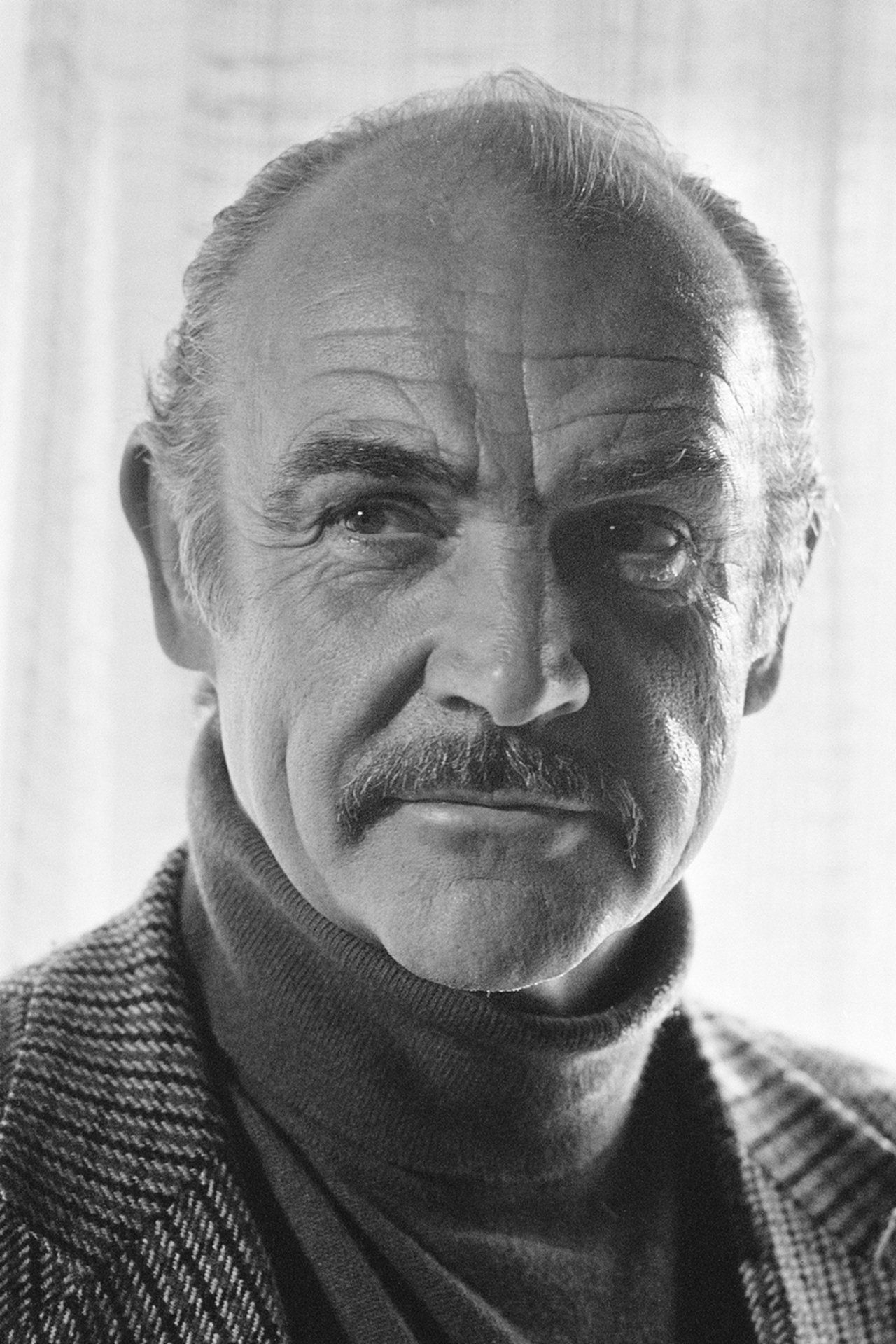
A coffin polisher who became the most imitated man in cinema, then quit because he couldn't stand the people making the films.
At a glance
- Known for
- The original James Bond across seven films, Oscar winner for The Untouchables
- Before fame
- Entered the 1953 Mr. Universe competition; a fellow contestant tipped him off about acting auditions
- Off-screen
- Lifelong Scottish independence campaigner who couldn't vote in the 2014 referendum because he lived in the Bahamas
Rise to Fame
Mr. Universe in 1953 didn't give him a place on the podium, but a fellow competitor tipped him off about auditions for South Pacific. Before that, he'd been a milkman, a coffin polisher, a lifeguard, and an artist's model at Edinburgh College of Art. The Navy had already discharged him at 19 for a duodenal ulcer.
Ian Fleming called him "an overgrown stunt-man" when the producers cast him as Bond in Dr. No. Dana Broccoli, the producer's wife, championed him over Fleming's objections. After the 1962 premiere, Fleming changed his mind so completely that he rewrote Bond's backstory to be Scottish in the next novel. Director Terence Young polished the Edinburgh tenement kid into someone who could sell martinis and tuxedos. The fan letters arrived by the thousands per week.
In the Spotlight
He quit Bond twice and came back twice. He walked out after the fifth film over a salary dispute, got lured back for Diamonds Are Forever at a record $1.25 million, donated the paycheck to his Scottish Educational Trust, and swore he was done. His wife named it Never Say Never Again as a joke when he came back in 1983.
The Oscar for The Untouchables in 1988 proved what he'd been arguing for decades: he wasn't just Bond. He played Indiana Jones's father at 58 and won a BAFTA for The Name of the Rose. Then The League of Extraordinary Gentlemen in 2003 broke him. He called the director "insane," reportedly came to blows on set, and retired permanently. He turned down $17.5 million from Brett Ratner the following year; Spielberg's pitch for Indiana Jones 4 got the same answer.
Side Notes
He funded the SNP for decades, campaigned for independence, and got knighted at Holyrood Palace in 2000 after reportedly being blocked for years because politicians didn't appreciate his politics. The catch: he lived in the Bahamas as a tax exile and couldn't even vote in the 2014 independence referendum he'd spent years promoting. Critics called him a hypocrite. Spanish authorities named their investigation 'Operation Goldfinger' after his Marbella villa sale. He was cleared; his wife was charged.
In a 1965 Playboy interview, he said he didn't see anything 'particularly wrong in hitting a woman.' He doubled down with Barbara Walters in 1987, calling it 'absolutely right' to slap a woman. His ex-wife Diane Cilento alleged physical abuse in her 2006 autobiography. He never took it back.
Final Chapter
His widow Micheline revealed he'd battled dementia in his final years, saying "it was no life for him." Bond producers Barbara Broccoli and Michael G. Wilson said he "revolutionized the world with his gritty and witty portrayal" of the character. His remains were cremated, and in 2022 his ashes were scattered at undisclosed locations in Scotland. Edinburgh International Film Festival established the Sean Connery Prize in 2024, a 50,000 pound award for filmmaking excellence.