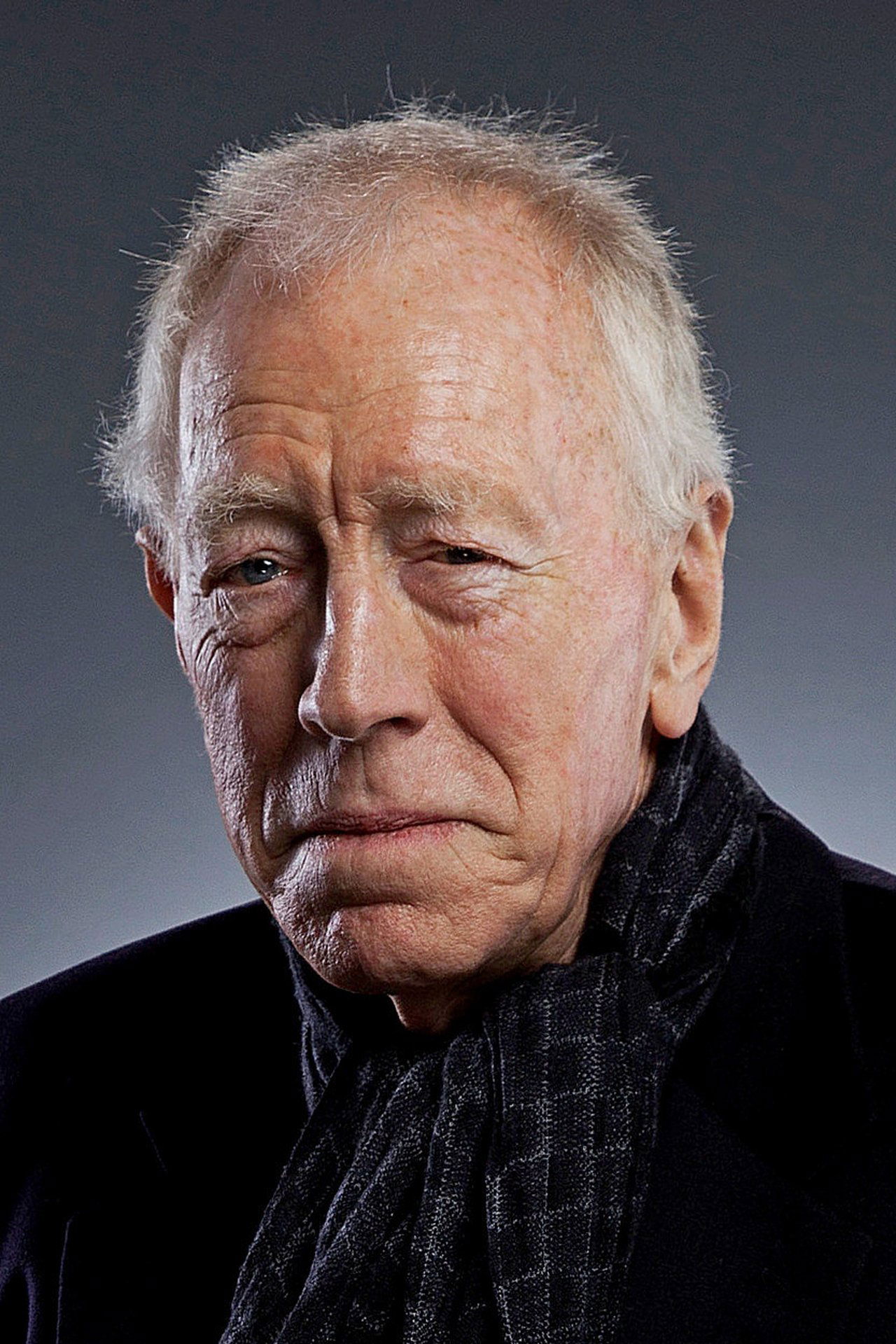
He played chess with Death and spent seven decades proving the Bergman label was the smallest thing about him.
At a glance
- Known for
- Ingmar Bergman collaborations, Father Merrin in *The Exorcist*, 70-year career across arthouse and blockbusters
- Before fame
- Named himself after the star of a flea circus while serving in the Swedish Army
- Off-screen
- Gave up his Swedish citizenship to become French in 2002
Rise to Fame
A single image made his career: a medieval knight playing chess with Death on a Swedish beach. The Seventh Seal (1957) turned him into Ingmar Bergman's leading man, and over the next 14 years he appeared in 11 of Bergman's films. He resented it. "They believe that's the only thing I can do," he said, "be a Bergman actor."
Hollywood's answer was to cast him as Jesus. George Stevens picked him for The Greatest Story Ever Told (1965) because international audiences didn't associate his face with secular roles. The film bombed, earning $15.5 million against a $20 million budget. Didn't matter. It got him out of Sweden, and that was the only move that needed to work.
In the Spotlight
At 43, he spent hours in a makeup chair to play an 80-year-old priest. The studio wanted Brando for Father Merrin in The Exorcist (1973). William Friedkin vetoed it, calling it "a Brando movie," and von Sydow's quiet menace set the template for every cinematic exorcist who came after.
He treated genre like a suggestion, not a boundary. Ming the Merciless in Flash Gordon (1980), then a Bond villain and Best Actor at Venice for Flight of the Eagle. An Oscar nomination for Pelle the Conqueror confirmed he wasn't picking a lane. In his eighties: the Three-Eyed Raven in Game of Thrones, Lor San Tekka in Star Wars: The Force Awakens. At 82, his second Oscar nomination was for a silent role in Extremely Loud & Incredibly Close. Most careers narrow with age. His was the exception.
Side Notes
The name was borrowed from a flea. While serving in the Swedish Army's Quartermaster Corps, he watched a flea circus and decided its star performer had a better stage name than Carl Adolf von Sydow. He kept it for the rest of his life.
His mother was a baroness. His father was a professor of folkloristics at Lund University, teaching the Norse and Celtic traditions he'd devoted his career to. He was supposed to become a lawyer, but a school trip to see A Midsummer Night's Dream killed that plan. In 2002, he traded his Swedish passport for a French one, following his second wife to Provence. The boy raised on Norse folk tales picked lavender fields over Stockholm.
Final Chapter
Diamond Management announced his passing, citing "infinite sadness" at "the departure of Max." Kyle MacLachlan, his Dune co-star, described him as "a gentle giant with tremendous presence and power." Martin Scorsese called him "something like a consummate actor, with a pride in his art and a dedication to his craft that I've encountered in very few people in my life."