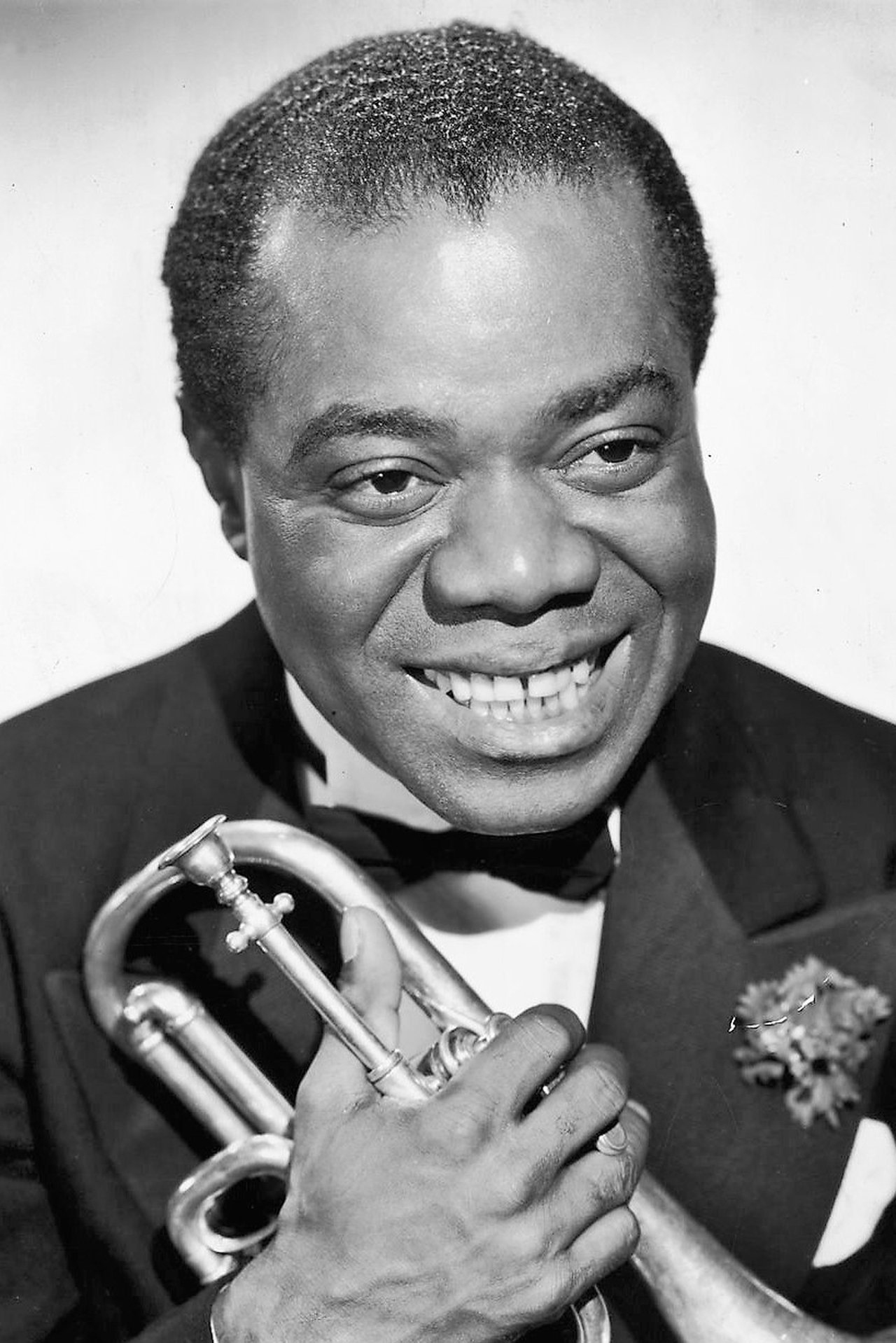
Rise to Fame
Arrested at 11 for firing a gun in the air on New Year's Eve, he was sent to the Colored Waif's Home for Boys in New Orleans, where someone handed him a cornet. That cornet is basically the whole story. By the mid-1920s, after stints with King Oliver's Creole Jazz Band in Chicago and Fletcher Henderson in New York, he recorded the Hot Five and Hot Seven sessions. Those recordings redefined what jazz could be. He's credited with inventing the extended improvised solo, transforming the music from a collective ensemble art into something built around one voice.
In the Spotlight
In 1964, Hello, Dolly! knocked the Beatles off the top of the Billboard charts. At 63, Armstrong was the oldest artist to hold the #1 spot on the pop charts. The State Department sent him to Africa, the Middle East, and Europe as a cultural ambassador during the Cold War to counter Soviet messaging. Bing Crosby has said he was the most important musician in American history. His phrasing shaped every major American singer from Billie Holiday to Frank Sinatra.
Side Notes
A Lithuanian-Jewish immigrant family named the Karnofskys took him in as a child, fed him, and loaned him $5 for his first cornet. He wore a Star of David pendant every day for the rest of his life. The record label head who received "What a Wonderful World" in 1967 hated it so much he refused to promote it in the U.S. It went to #1 in the UK for 13 weeks anyway. His aggressive playing style tore his lip muscle so severely that medical literature eventually named the condition "Satchmo Syndrome."
Final Chapter
25,000 people filed past his open casket at the 77th Regiment Armory in Manhattan. CBS aired a prime-time tribute hosted by Walter Cronkite, with Dizzy Gillespie, Earl Hines, and Peggy Lee among the performers. His honorary pallbearers included Bing Crosby, Ella Fitzgerald, Duke Ellington, Frank Sinatra, and Count Basie. President Nixon issued a formal eulogy. New Orleans renamed its international airport after him in 2001.