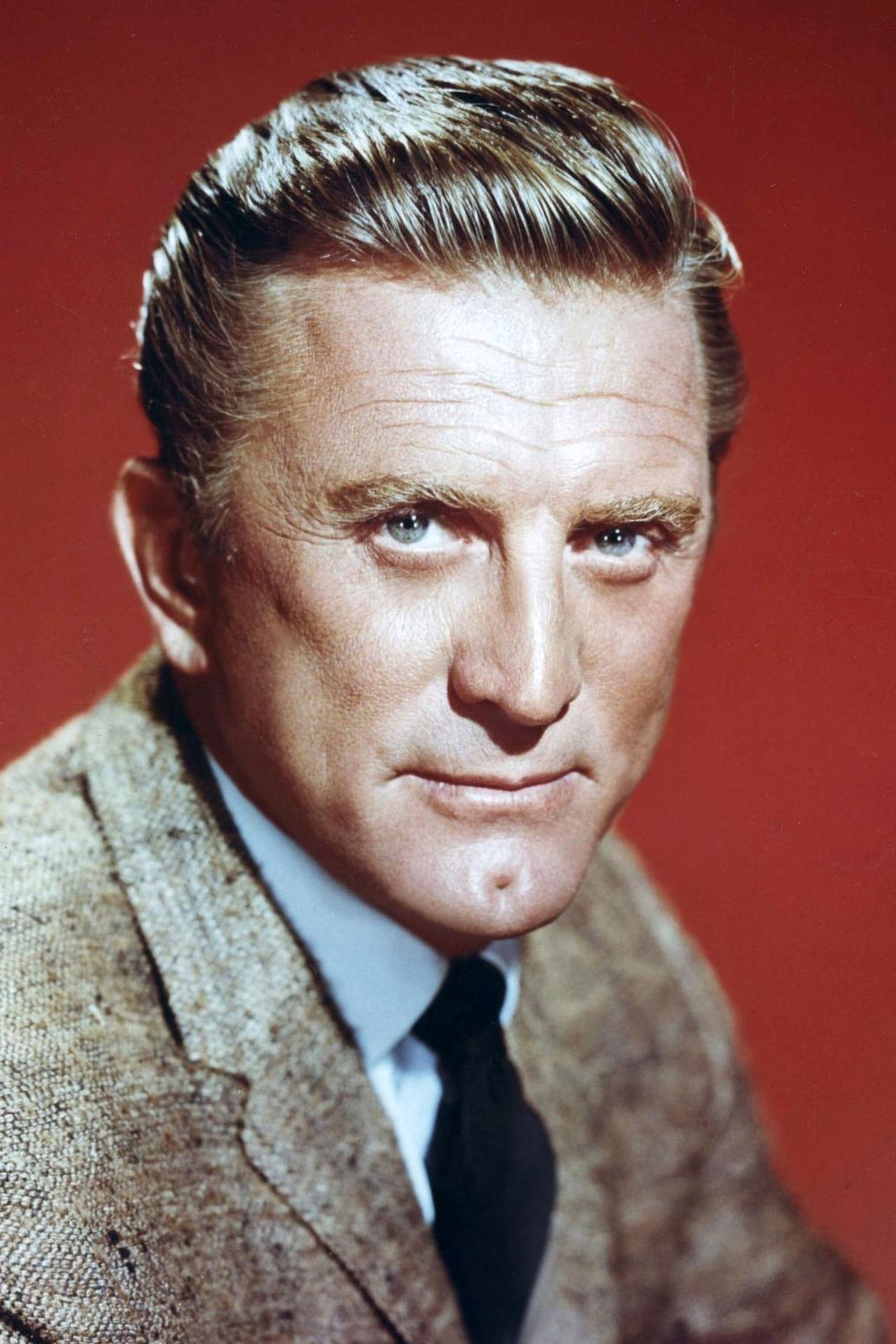
Rise to Fame
He got famous playing men nobody liked. His eighth film, Champion (1949), cast him as a boxer so ruthlessly selfish that most actors wouldn't touch the part. He took it over a role that paid three times as much at MGM. The gamble landed him his first Oscar nomination. He wasn't handsome in the way the studios wanted, and Champion didn't need him to be. He was intense, coiled, a little dangerous. Two more nominations followed, for The Bad and the Beautiful and Lust for Life, but he never won a competitive Oscar. The Academy gave him an honorary award in 1996, fifty years into the career, which tells you everything about how comfortable the industry was with him.
In the Spotlight
The role that defines him isn't a performance. It's a producing credit. He insisted on crediting Dalton Trumbo, a blacklisted screenwriter who'd served prison time for defying HUAC, under his real name on Spartacus. He waited until Universal had spent $8 million to tell them. The studio couldn't shut it down. Kennedy crossed a picket line to see it. Douglas called it the proudest thing he ever did, and the Writers Guild gave him an award for it in 1991. He spent his last decades giving money away with the same stubbornness. He left $50 million of his $61 million estate to charity. His kids got nothing. When you've been a ragman's son from Amsterdam, New York, giving it all back is the point.
Side Notes
A helicopter collision over Santa Paula Airport in 1991 killed two people in the other aircraft. Douglas walked away with a compressed spine. He has said the crash was what sent him back to the Judaism he'd abandoned as a young man. Five years later, a stroke took his speech. He considered ending his life. Instead he relearned how to talk through months of therapy and accepted an honorary Oscar two months post-stroke. His son told him to just say "thank you" and leave the stage. He gave a full speech.
Final Chapter
A private service at Westwood Village Memorial Park Cemetery on February 7 drew Steven Spielberg among the mourners. Michael Douglas announced the death on Instagram, writing that his father was "an actor from the golden age of movies." SAG-AFTRA President Gabrielle Carteris called him "a powerful voice who helped end the blacklist." His wife Anne Buydens Douglas died fourteen months later at 102, buried beside him.